BMW F10 Water Inside Headlight Repair

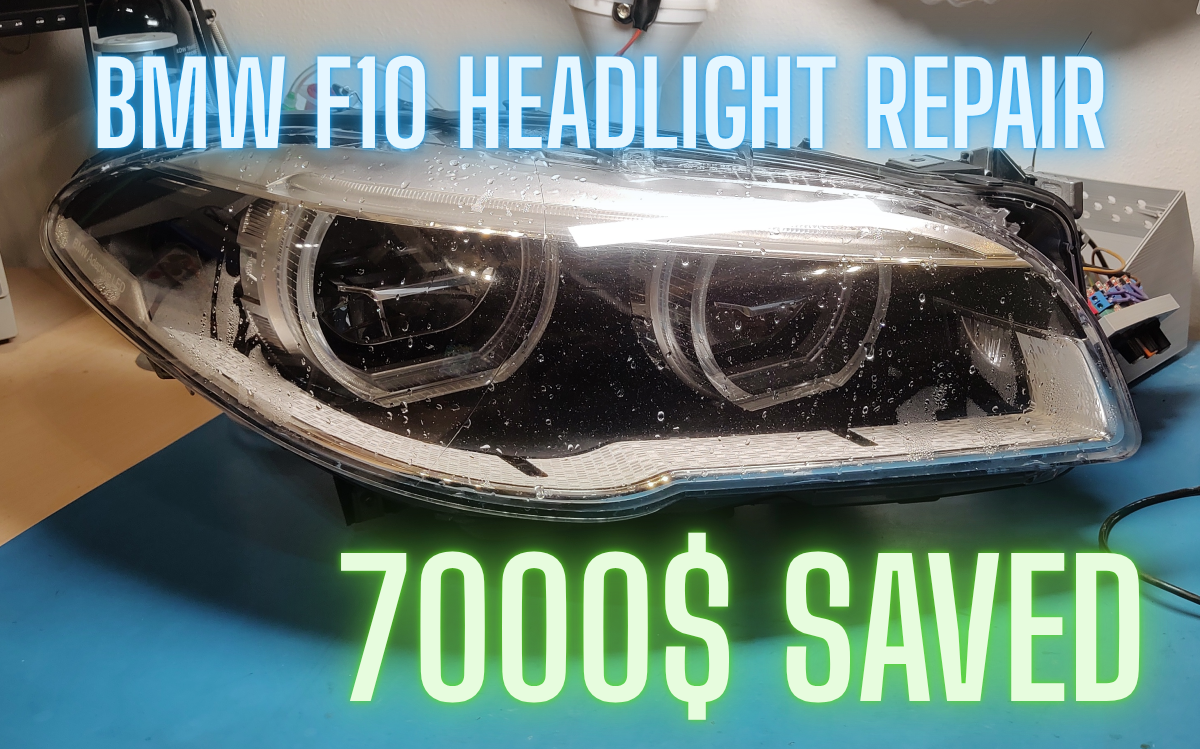
bmw f10 broken headlight with water inisde

About

In this post, I will talk about the repair I made to the adaptive LED headlight for my BMW F10 530XD. I thought I’d document the process and post it online so it can help out anyone trying to do the same.

My headlights started getting a foggy/had mousiture buildub a bit more often. Eventually there was a bit of standing water inside and I started getting a bunch of errors like Low and High beam defective, etc… I asked at the dealership how much the repair would cost and I got quoted over 3000$ for just a single headlight with labour.

There is no way I’m paying like 7000$ to replace the headlights, so I decided to repair them myself. 

Hardware Used

The Issue

Your headlight has an excessive amount of moisture or is excessively foggy. A bit of moisture can be normal during certain weather, as vents allow air to come in and out, so they might fog up a little bit and then dry out by themselves, which is normal.
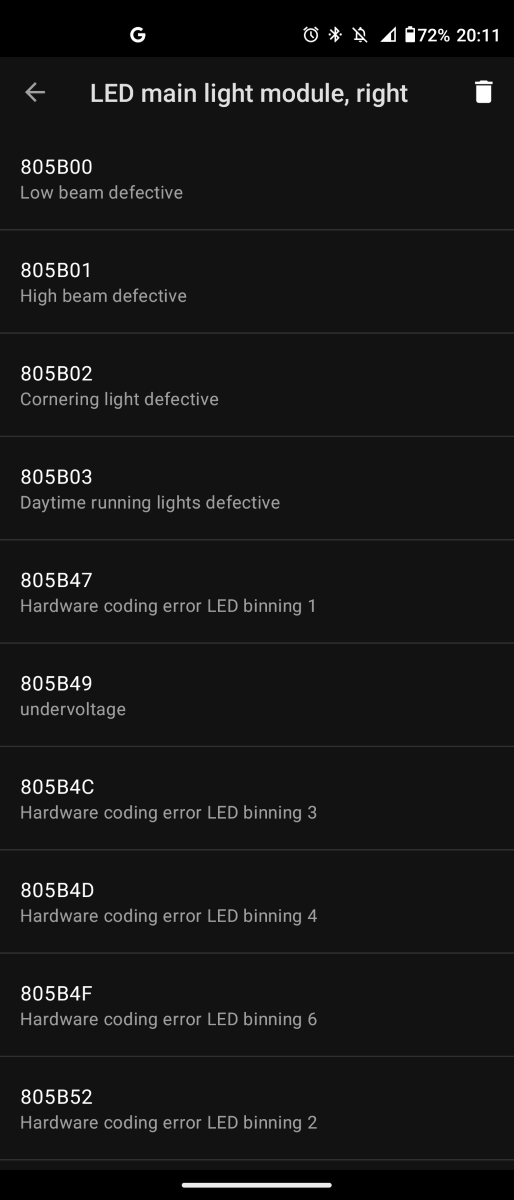
But if moisture becomse excessive even to the point where liqiuid water is accumulating inisde the headlight and or you stat getting errors like “805B00: Low beam defective“, “805B01 High beam defective“, “805B02: Cornering light defective“, “805B03: Daytime running light defective“, “805B47: Hardware coding error LED binning“, “805B49: undervoltage“, … the water is shorting something out, or it already damaged something in the headlight.
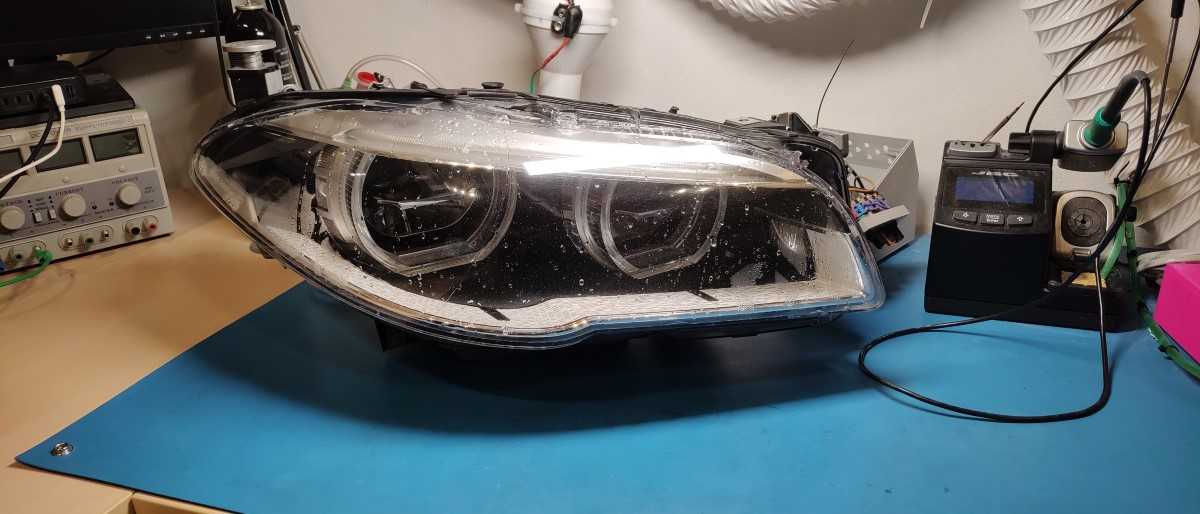
Here’s an image of my headlight and the errors I was getting.

There are a few possible reasons for water ingress: clogged vents preventing moisture from escaping, a broken/leaky connector, one of the cover seals or other hardware seals is broken, the lese/front glass is cracked somewhere, the lense/front seal is broken, or the housing of the headlight itself is cracked.

Each of these requires a different repair. In my case, the housing of the headlight was cracked, so this is what I will be showing you how to repair. If your lens or lens seal is broken, which is another common issue, here’s a great video on how to fix that.

How To Repair The Headlight Housing:

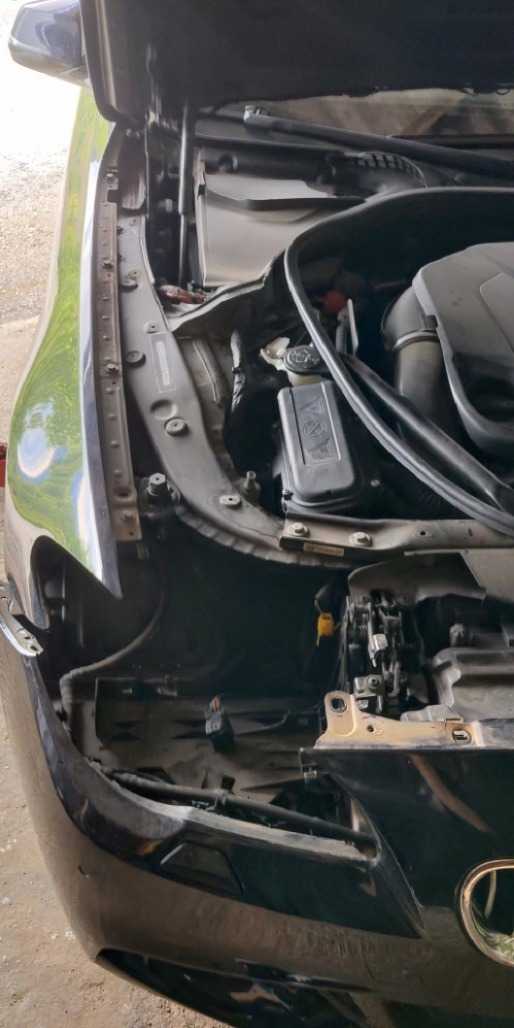
To remove the headlight, it’s kind of a pain in the ass. I would recommend you take a look at a few videos (the same video I linked above also shows the removal process) to check how to remove it, as it’s way easier to understand than by looking at pictures. Also, if you have a different car model/brand, the process will obviously differ anyway.

One recommendation I have for the F10 is to jack up our car and remove the front tire and the wheel well liner entirely. This will make access to one of the screws way easier.

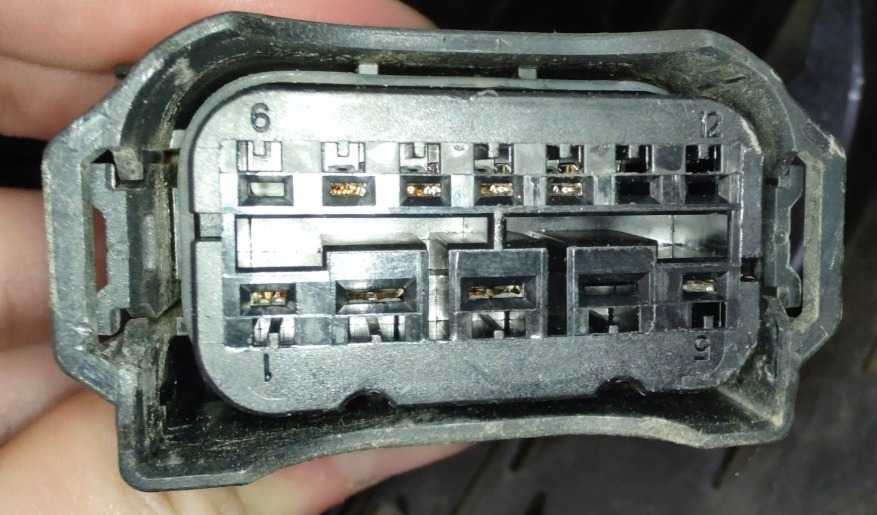
When you remove the headlight, check the connector first. Sometimes it can crack, and that’s the actual reason water is getting inside the headlight. You also need to check the pins for corrosion. If any is present, you have to clean it or maybe even replace the entire connector if it’s too bad.

In my case, the connector wasn’t damaged in any way. It had some water in it, but I caught it early enough so there wasn’t any corrosion yet. The brown-looking stuff in the pins isn’t rust, it’s just the shiny copper of the wire crimped into the connector pins.

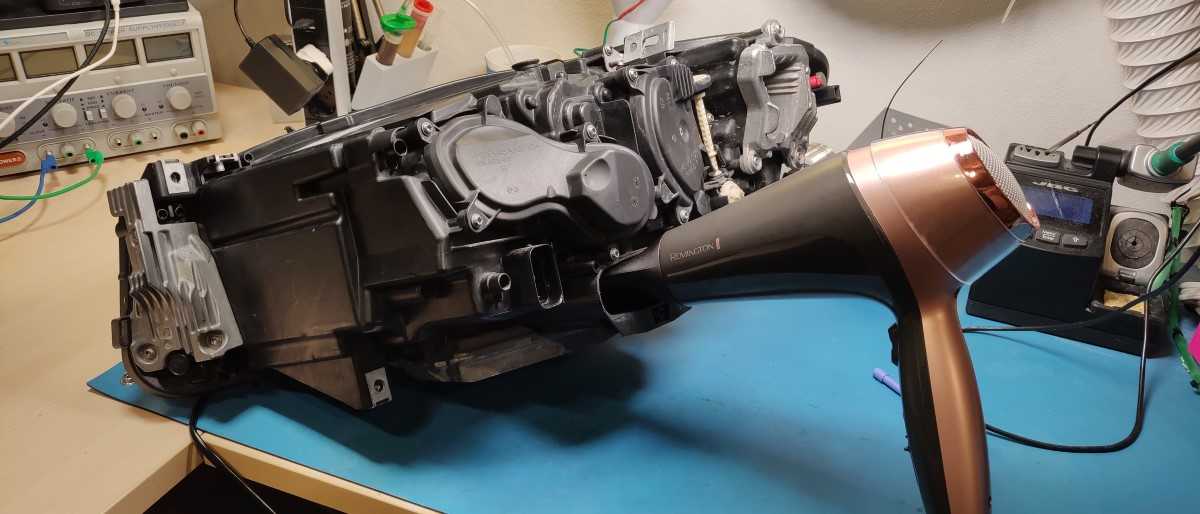
I removed the electronics control board/module and stuck a hair dryer inside it to dry out the headlight.
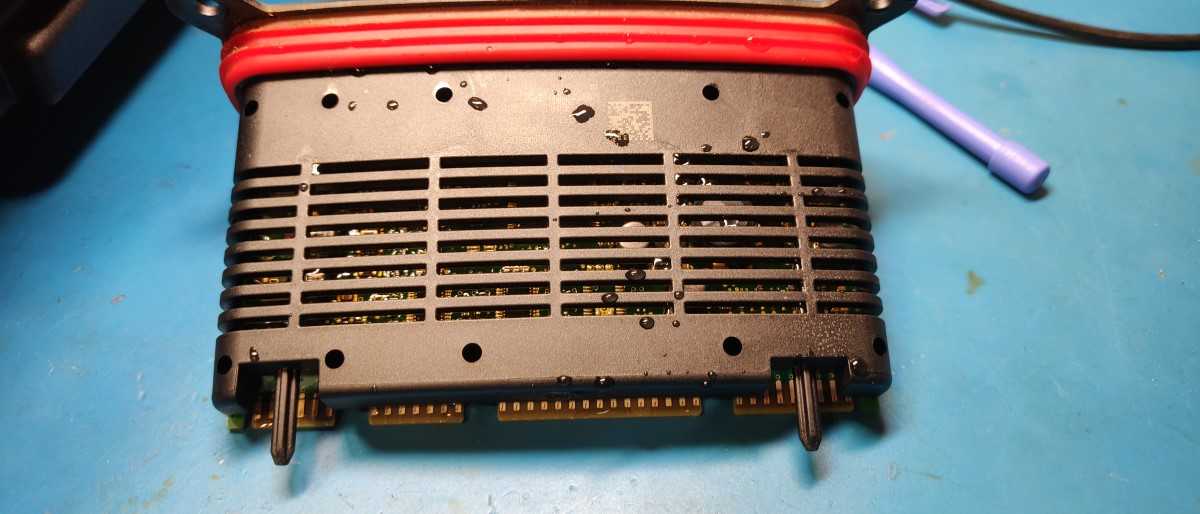
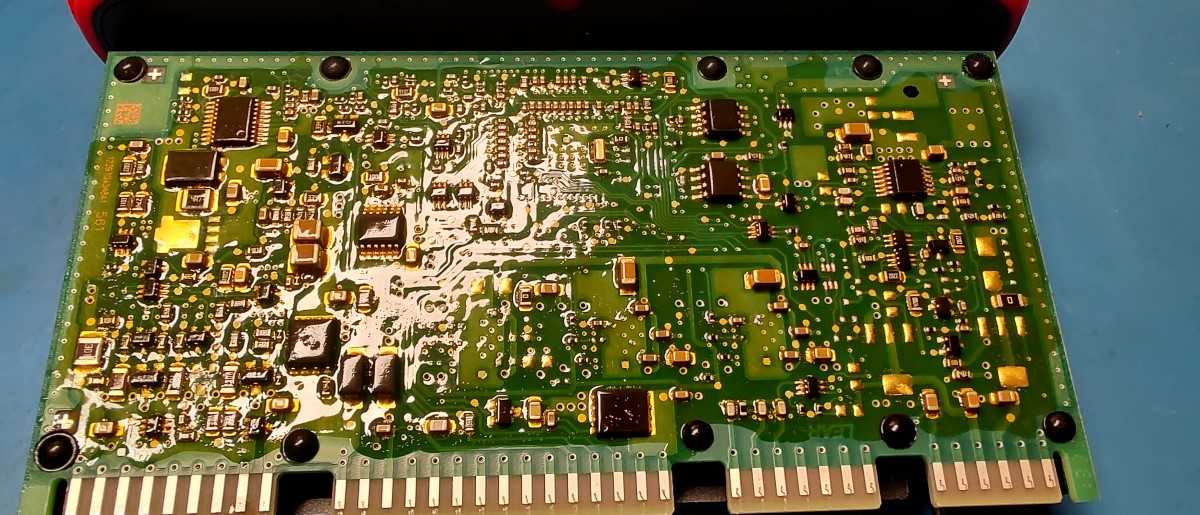
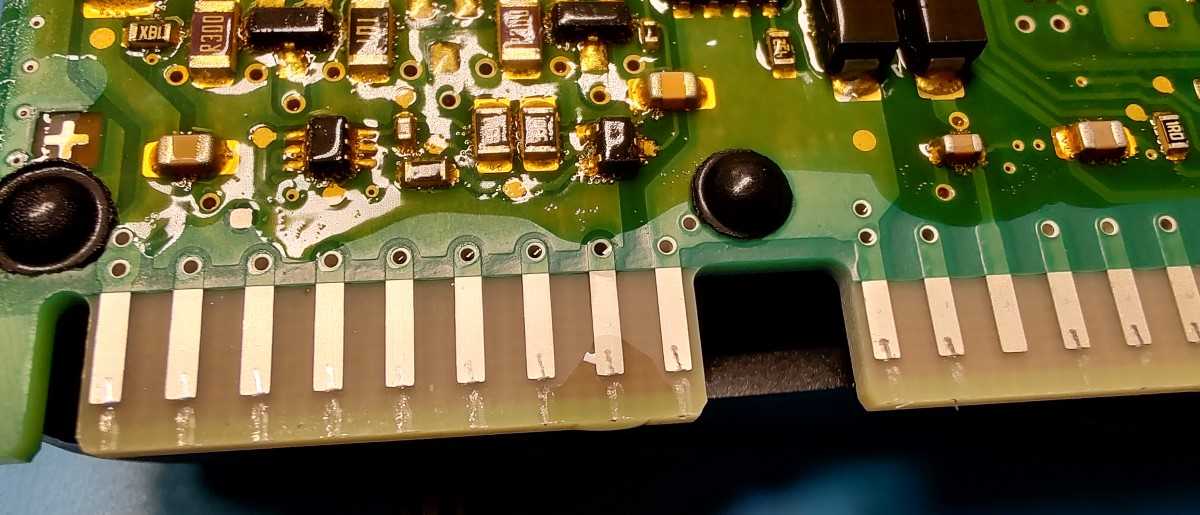
The module was also wet, so I dried it out as well and inspected it for damage. Luckily, I caught the problem early on and there was no damage. If the module is damaged, you might have to repair it or buy a new one.
The glossy-looking residue is not water but a conformal coating added to the PCB to protect it from moisture/liquid.
On the connector pin, you can actually see a droplet of water. Again, luckily, there was no corrosion here yet either.
Now I re-inserted the module and proceeded to the leak test.

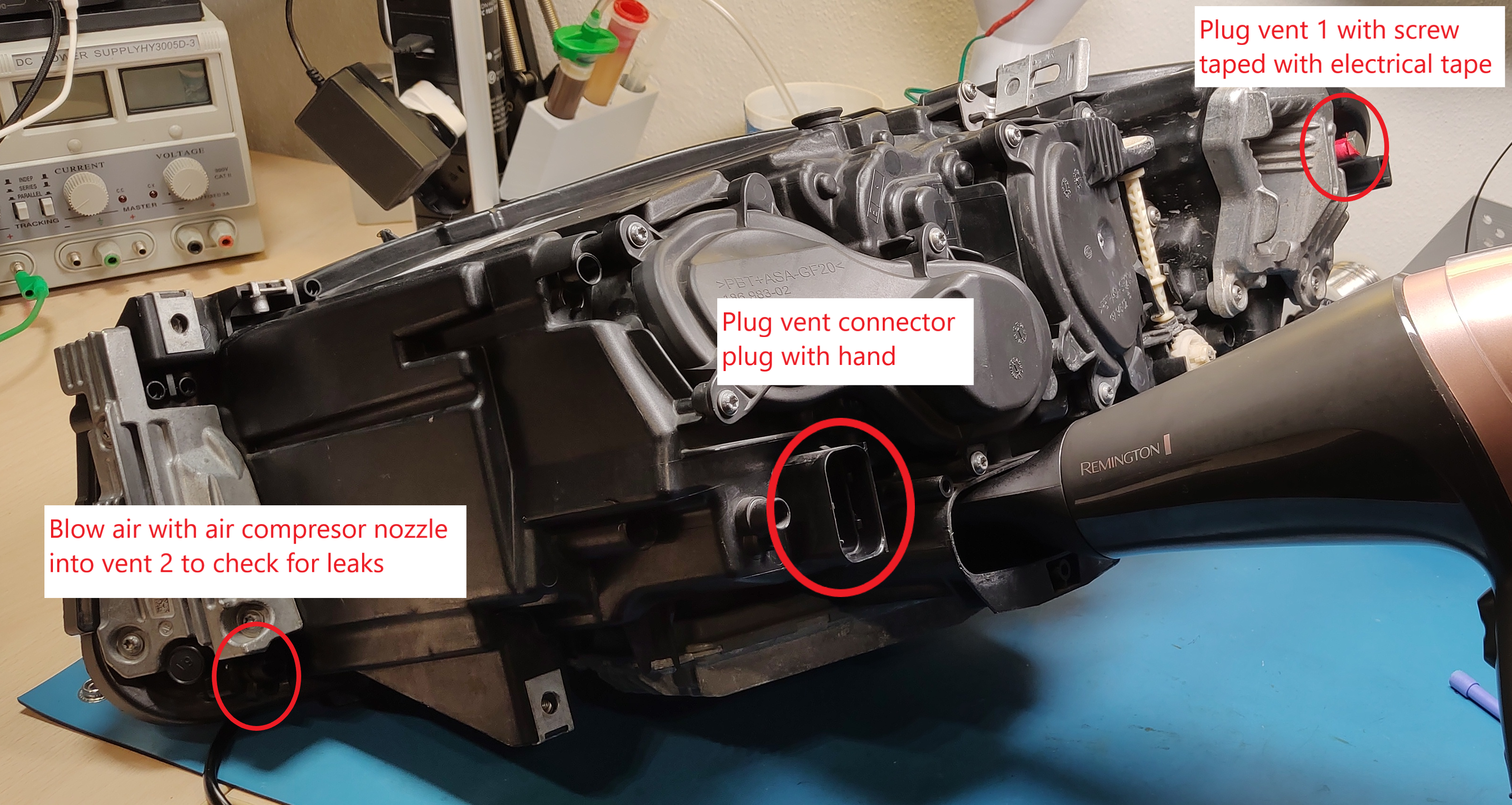
Use soapy water in a spray bottle and spray it all over the headlight, then plug one of the vents and use the second vent to pressurize the headlight with an air compressor(be careful not to overinflate it and crack it you only need a little), or a can of pressurized air. I just covered the connector with one hand while using the other hand to blow air inside the headlight.

Now you will see bubbles coming out of any cracks in the body of the headlight, front glass/lense, front glass-to-body seal, and other seals.

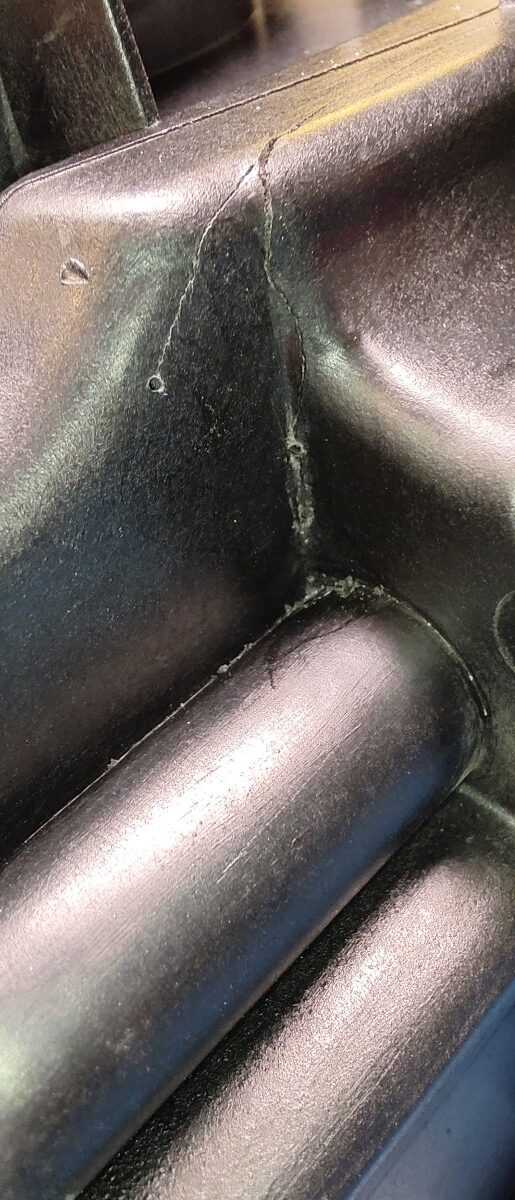
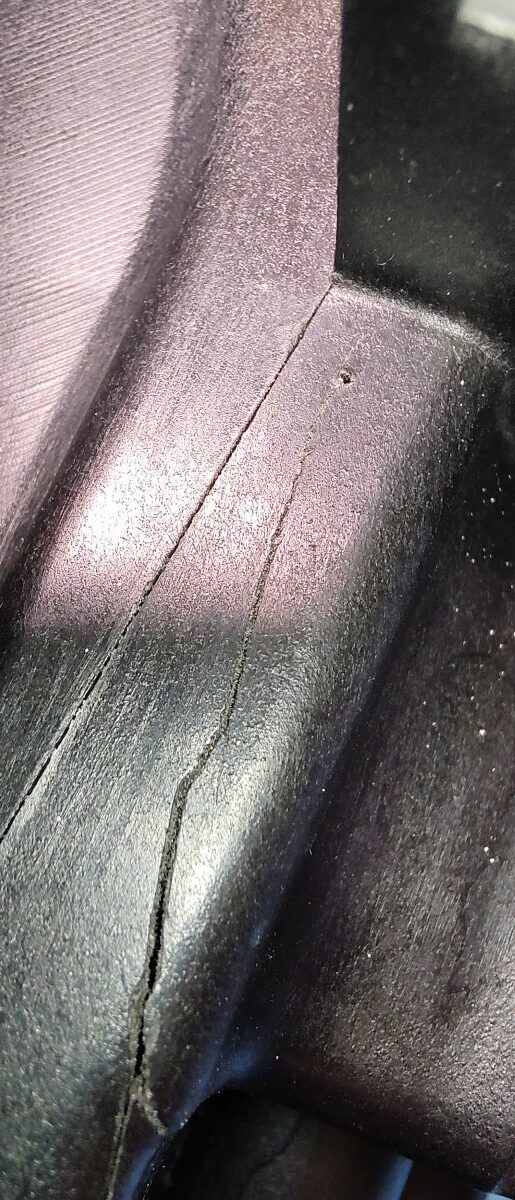
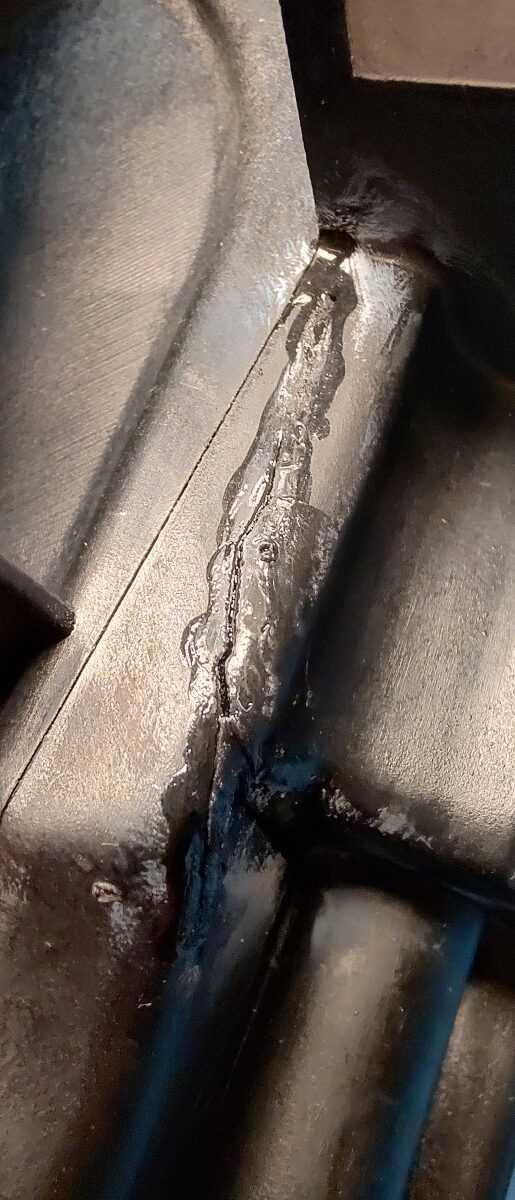
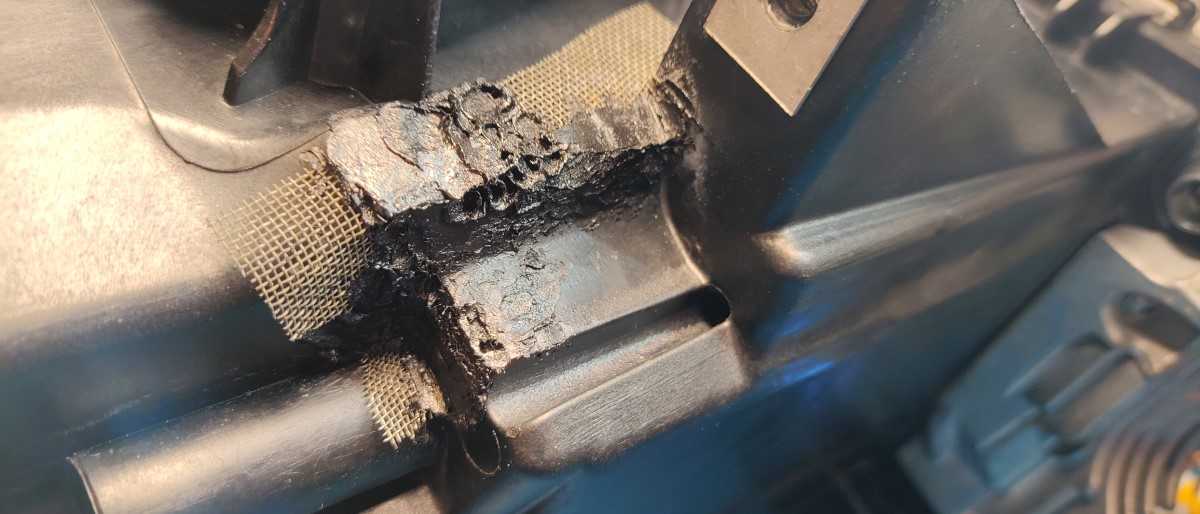
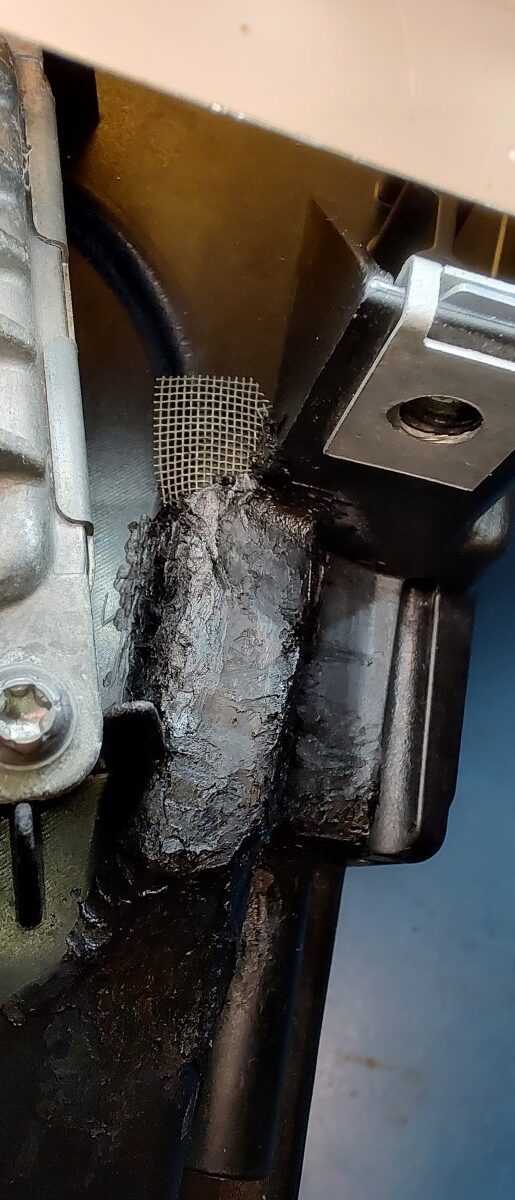
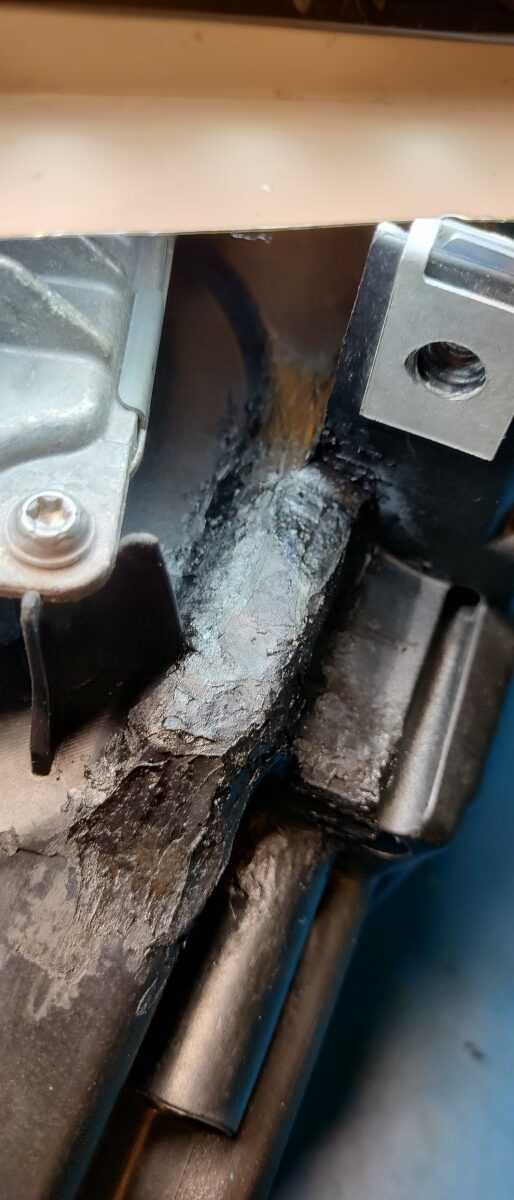
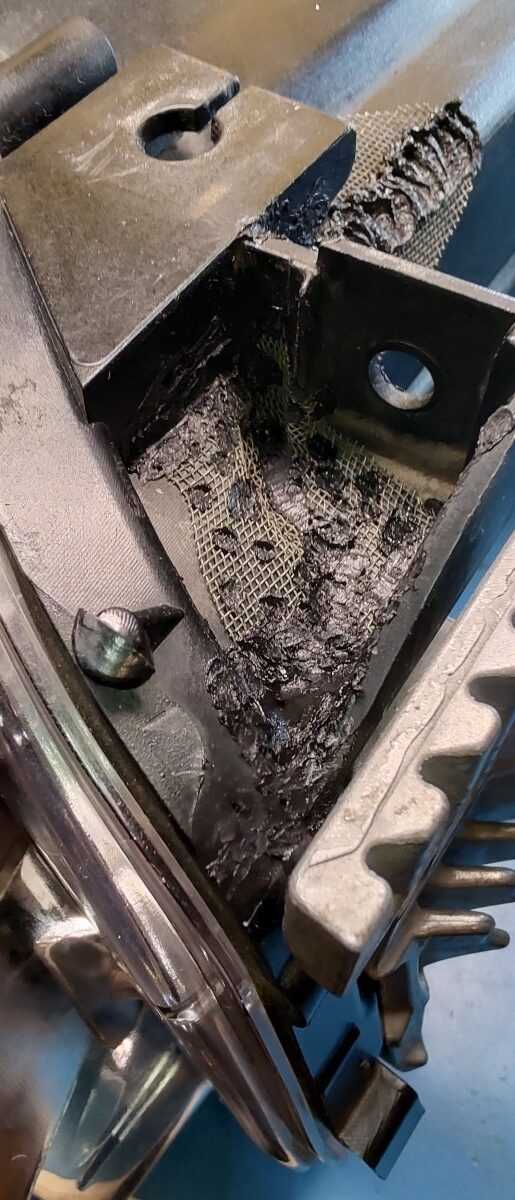
As mentioned before, in my case, the issue was cracks in the housing that propagated from the mounting points.
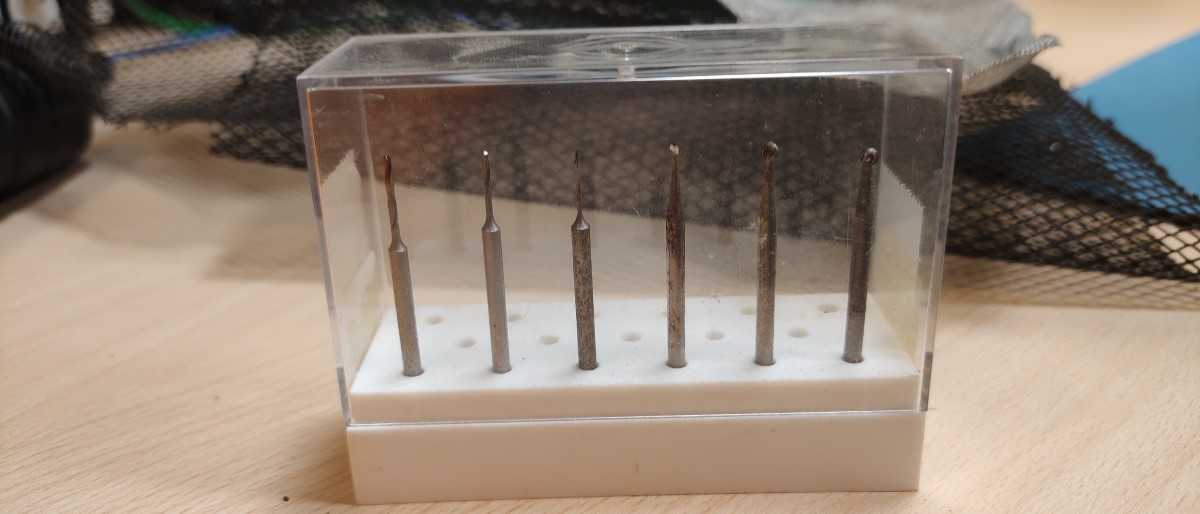
As you can already see in the image above, I have used these mini drill bits to drill a small hole at the end of the cracks in an attempt to stop them from spreading.
Next, I applied a generous amount of super glue and tried to spread the cracks a bit so the glue could go as deep as possible, hopefully also all the way through.
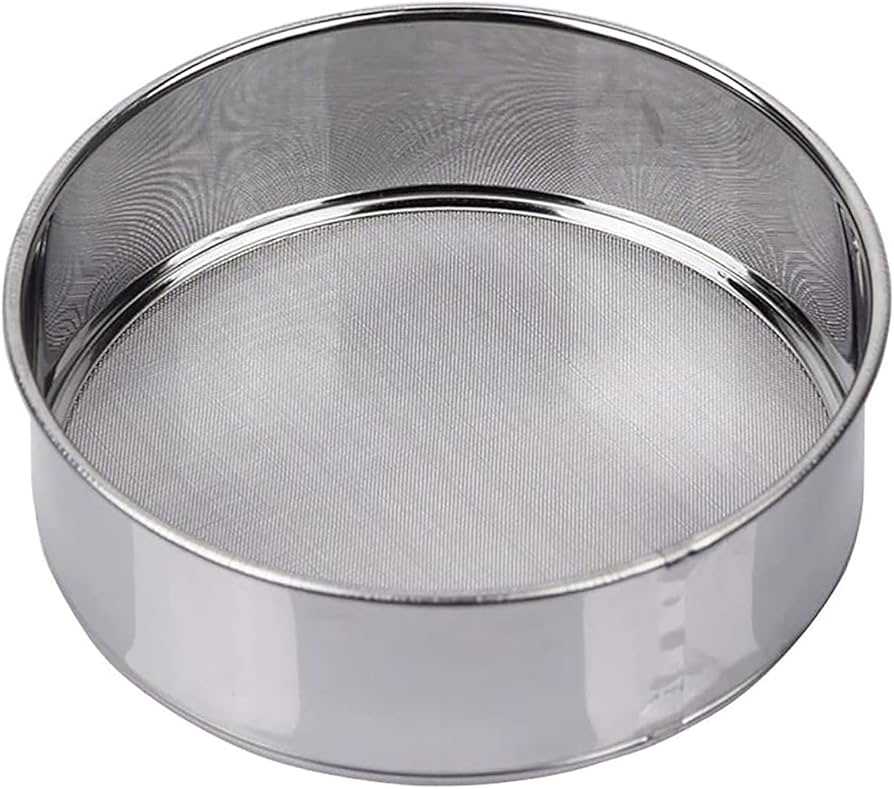
Finally, we get to the plastic welding. I used some fine steel mesh I got from an old flour sieve. I then used my soldering iron to melt the mesh about 1/3 to 1/2 way into the case.

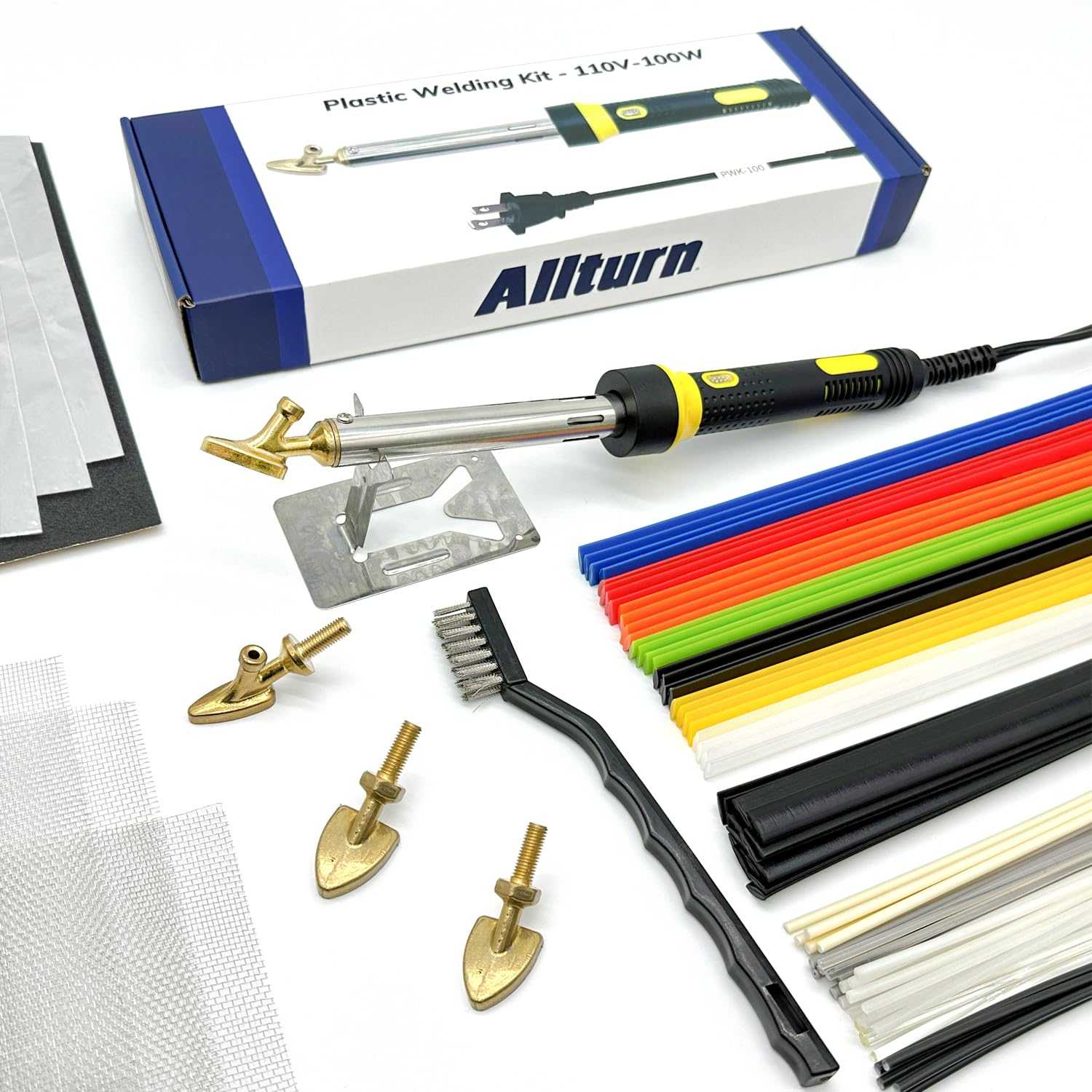
You can also get a dedicated #adAmazon Linkplastic welder kit. This tool has a bigger surface area, which makes it easier and more uniform to melt the plastic. As I said, I did it with my soldering iron, but this would have come in handy and would have been quicker.

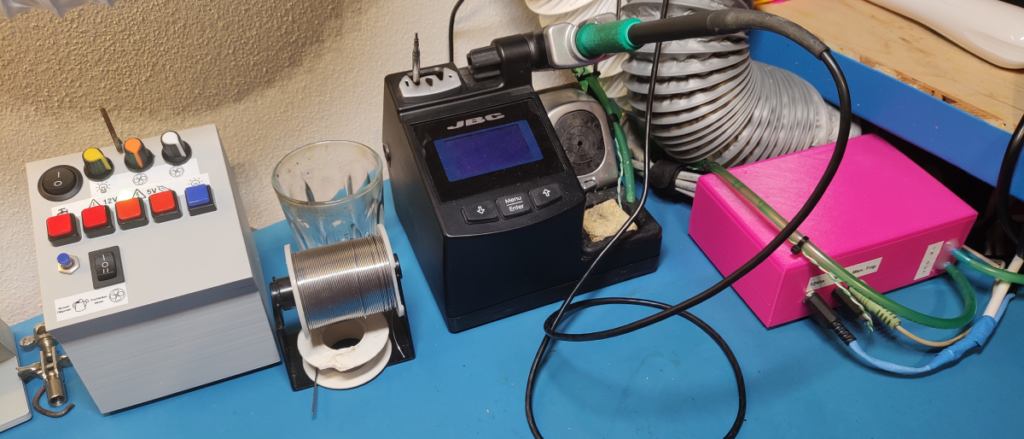
Note: When doing this, make sure you do it in a well-ventilated area and avoid inhaling any of the fumes. I did it on my workbench, and I used my fume extraction system I built.

After this, I reinstalled the headlight into my car and after about a year, I still have had no problems with it so far.

Leave a Reply

Your email address will not be published. Required fields are marked *

The following GDPR rules must be read and accepted:
This form collects your name, email and content so that we can keep track of the comments placed on the website. For more info check our privacy policy where you will get more info on where, how and why we store your data.