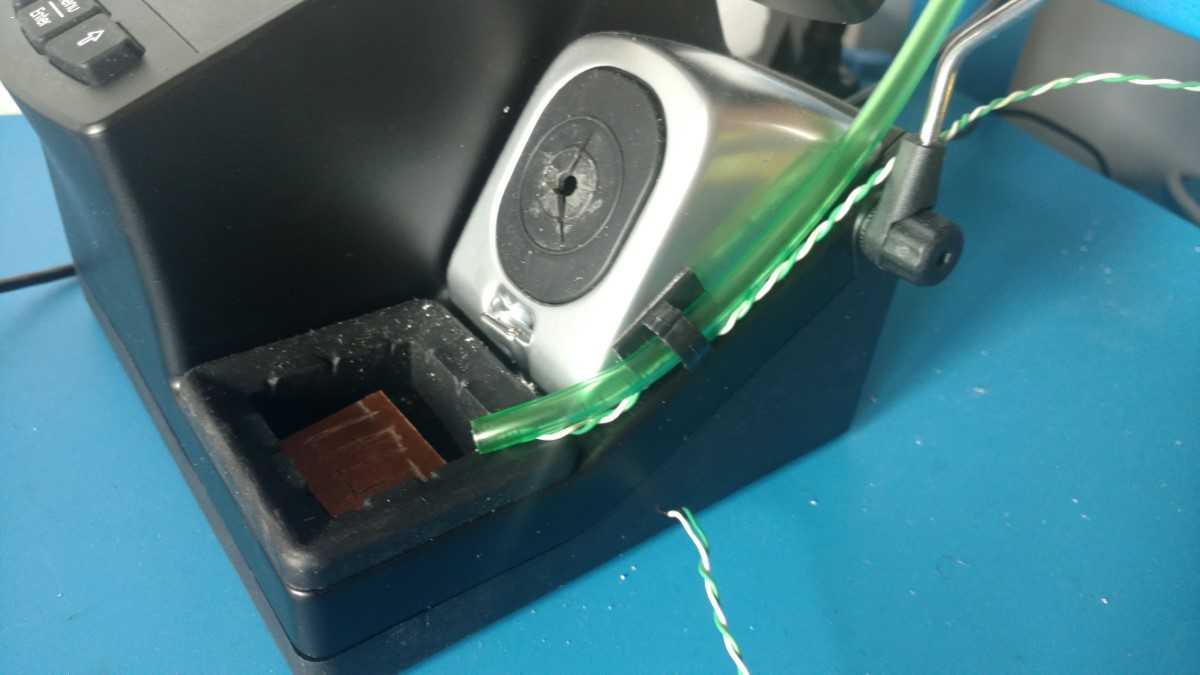
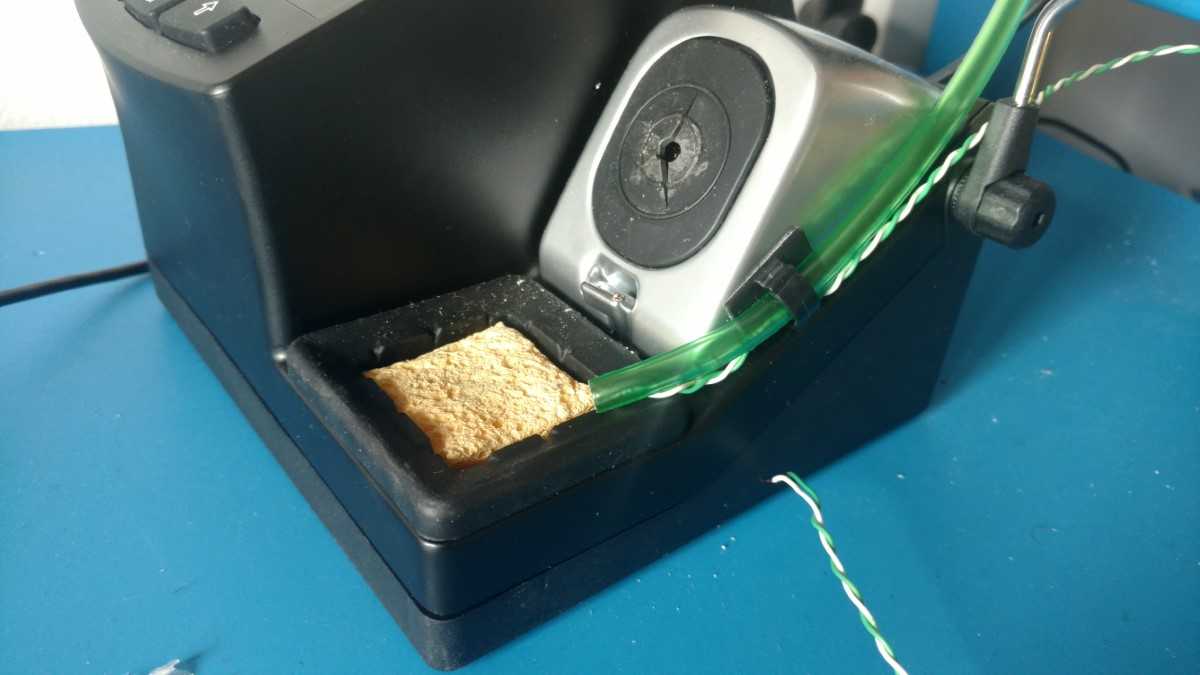
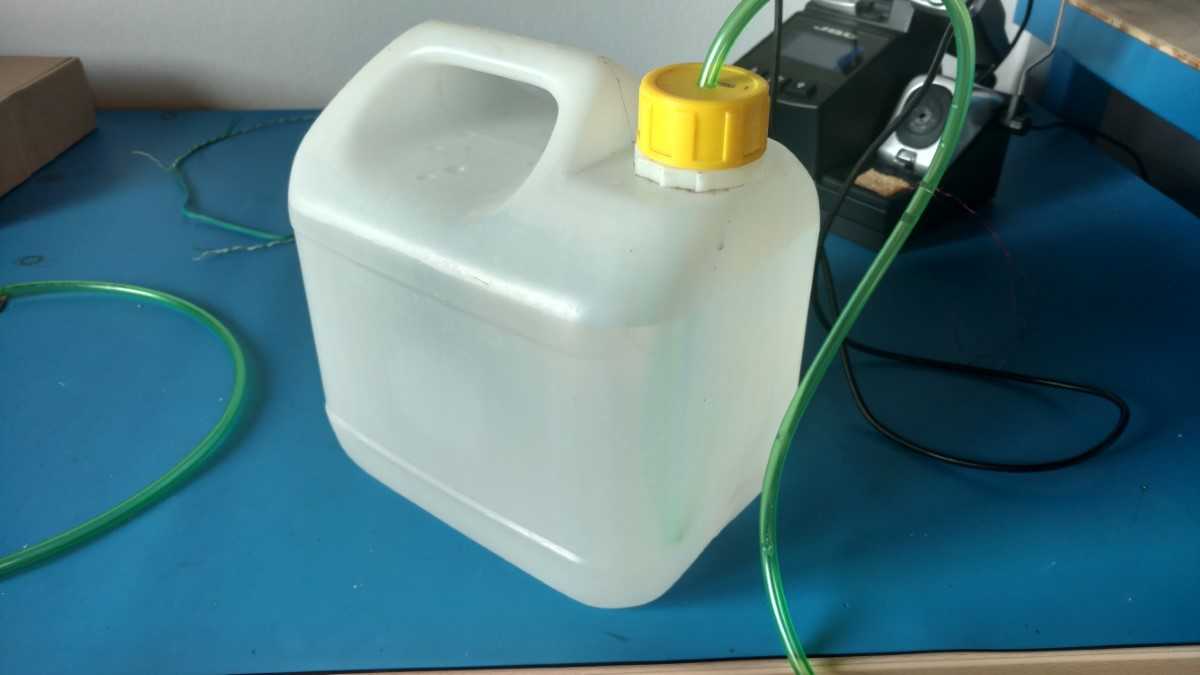
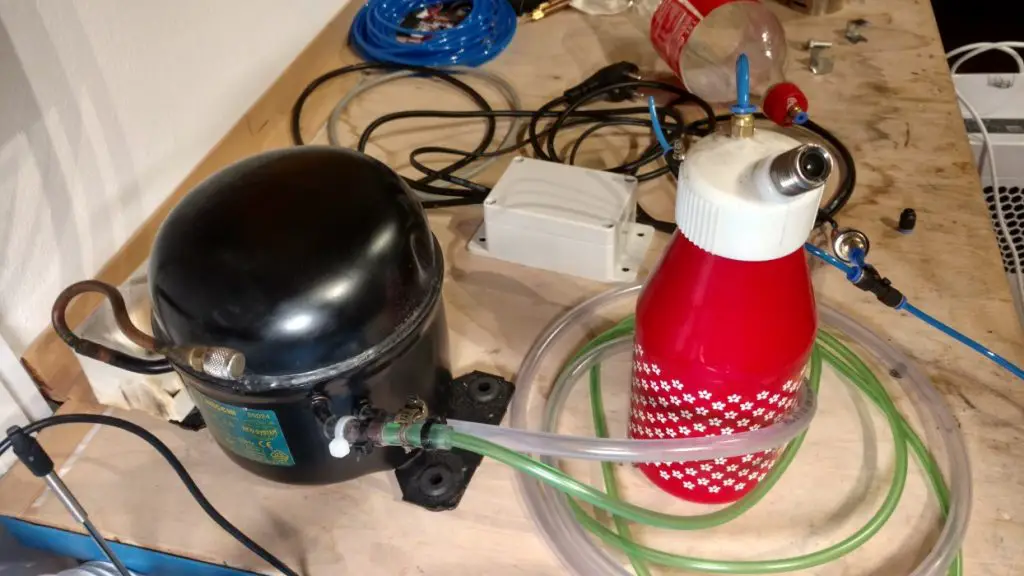
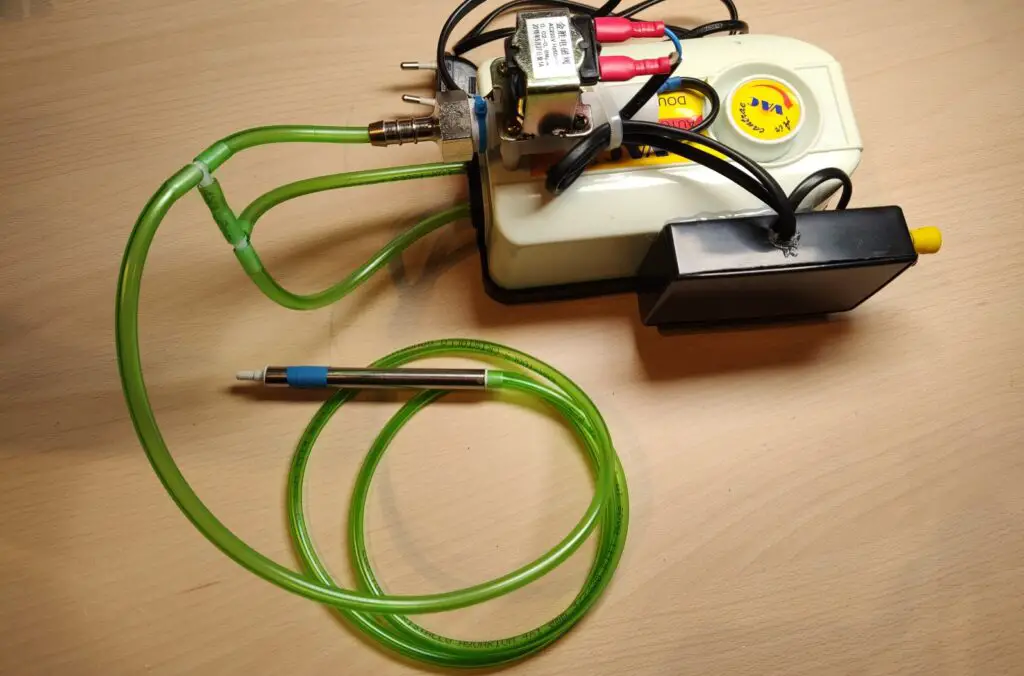
In this post, I’ll show you my automatic soldering sponge water dispenser. I got tired of the soldering sponge drying out, so I built an automatic water dispenser to “water” it.
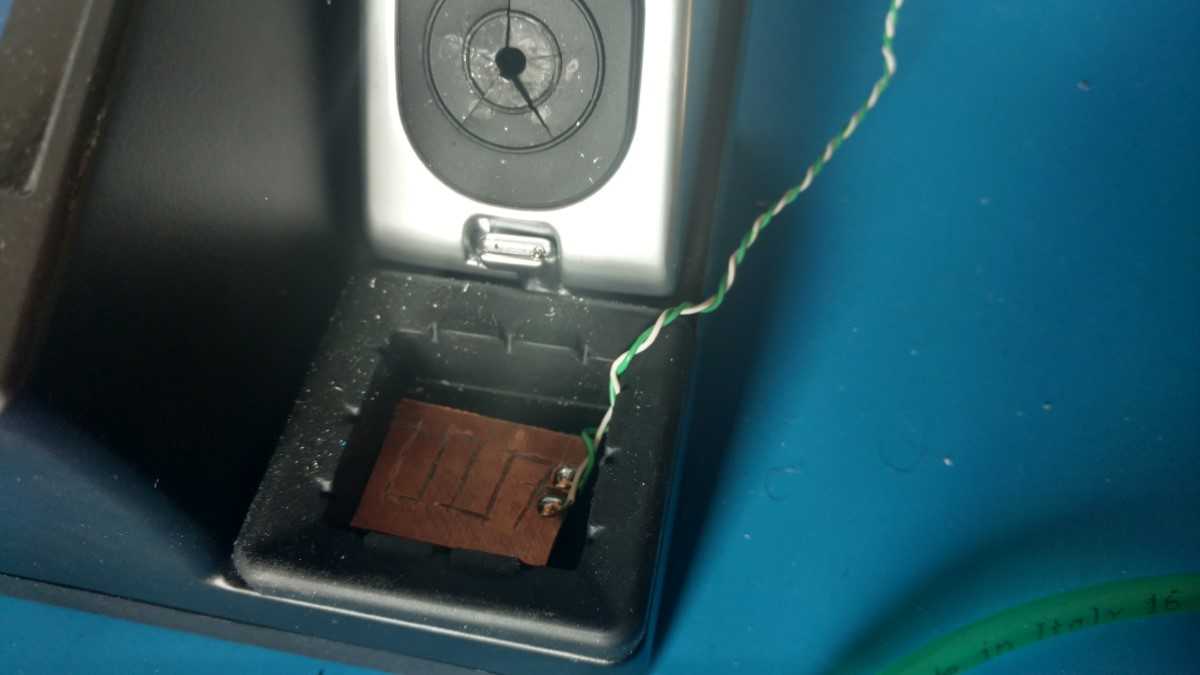
The dispenser uses a sensor to measure the resistance of the sponge. If the sponge dries out too much, the resistance goes up, the microcontroller detects it and turns on the pump.
This is another one of those projects I started years ago and finally got around to finishing. I started this thing in early 2017, maybe late 2016, then I restarted it somewhere in 2024, and I’m now finally writing a blog post about it. So yeah… It’s been almost a decade since I started it, but better late than never, I guess.
You can find all the project files, like the firmware, 3D enclosure files and KiCad project files in this GitHub repo here.
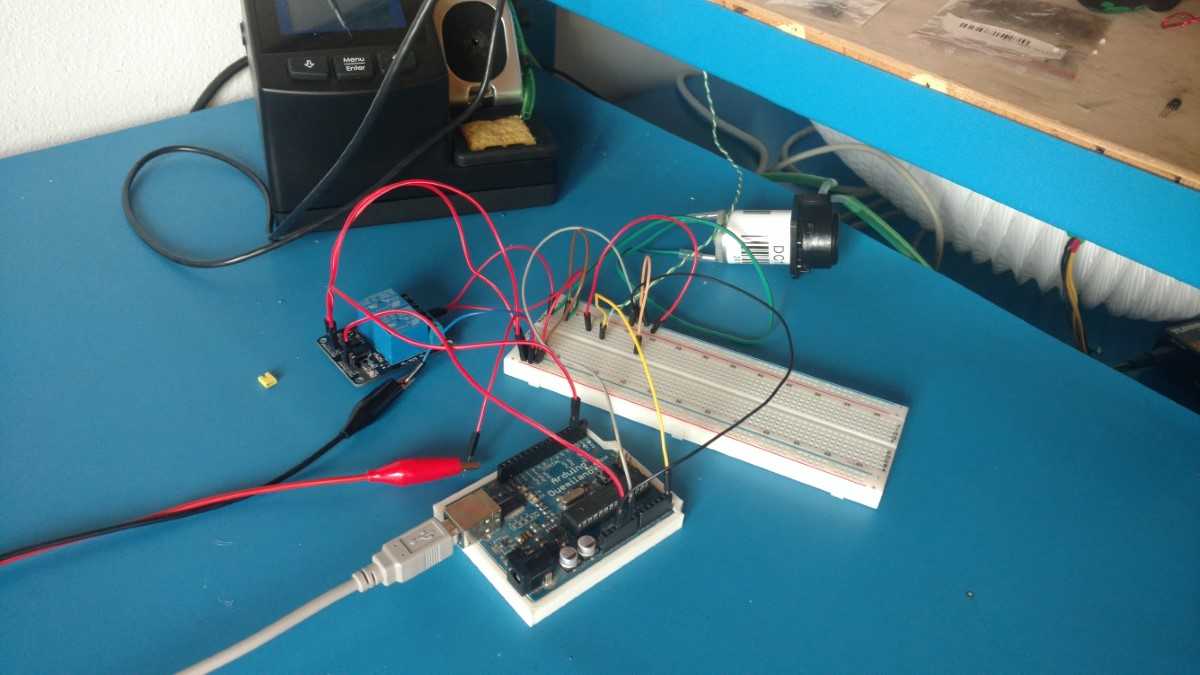
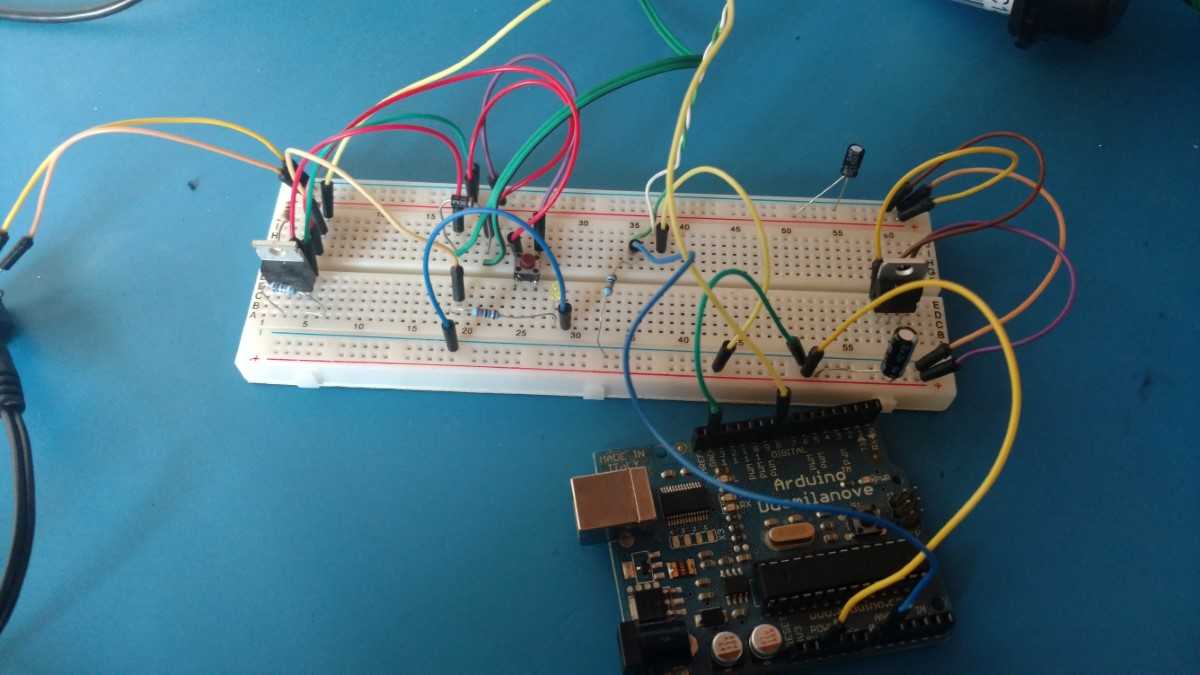
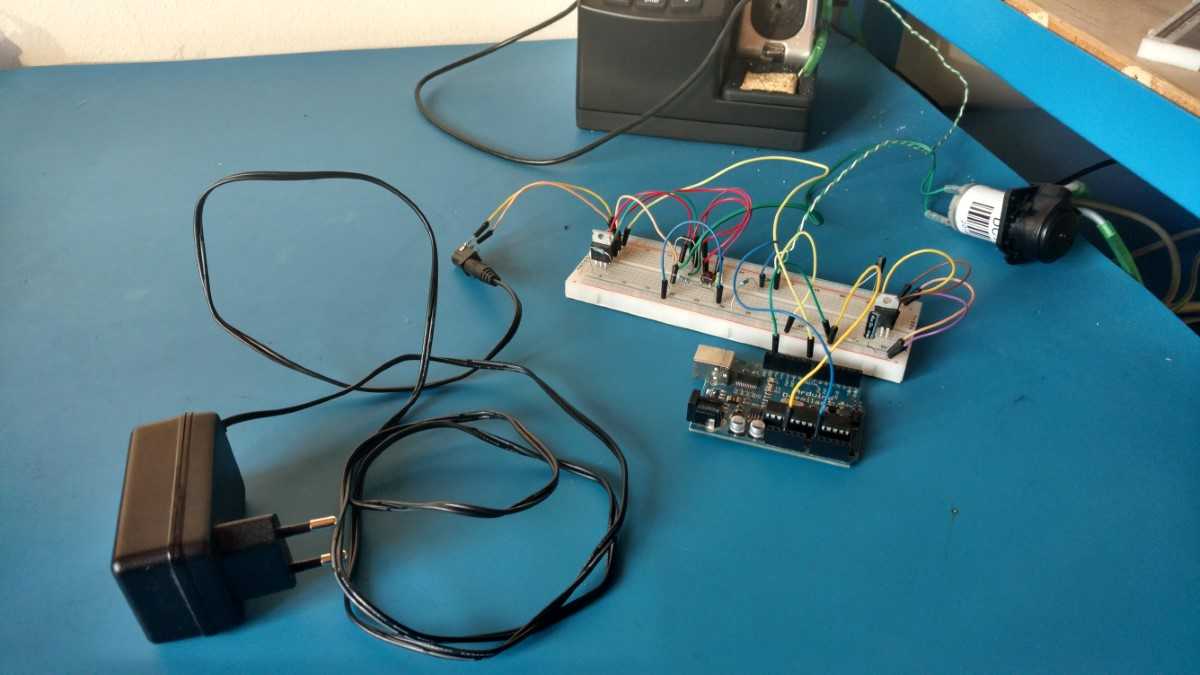
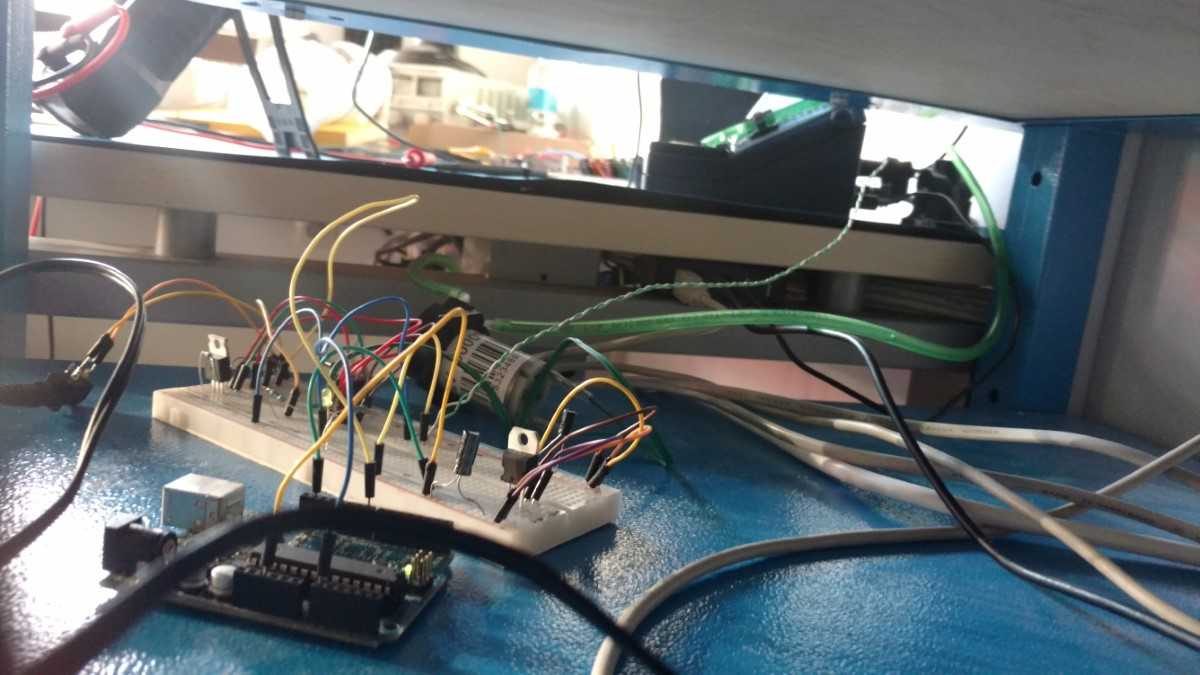
Initial Prototype
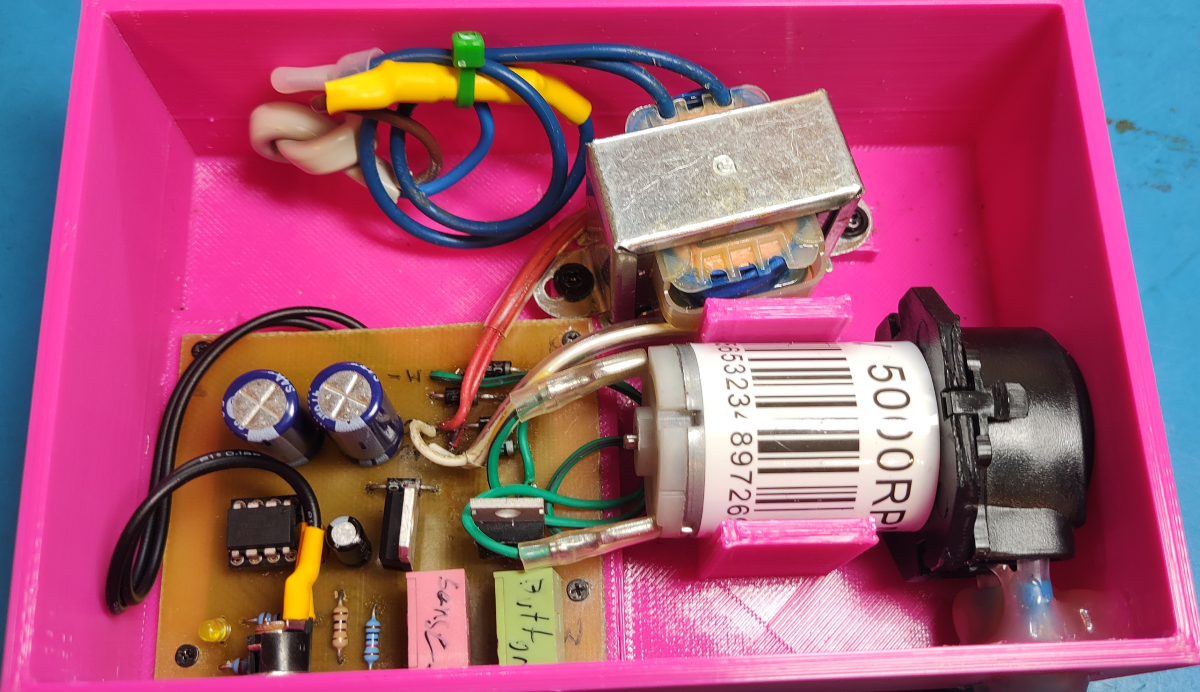
Build
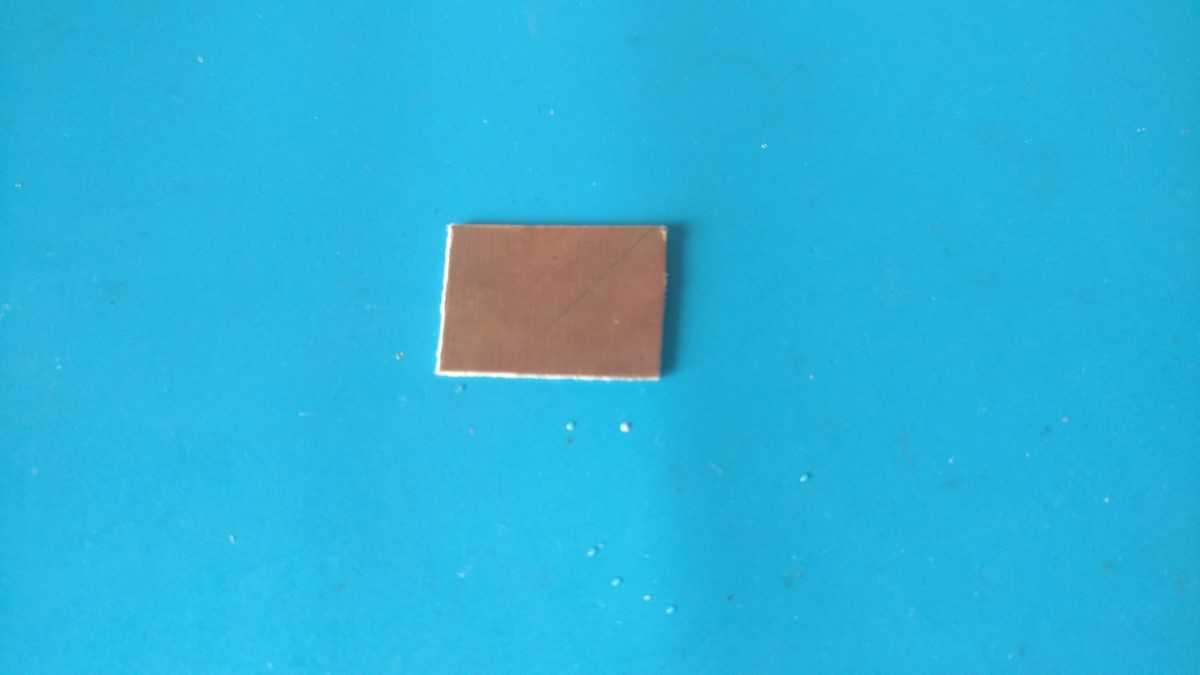
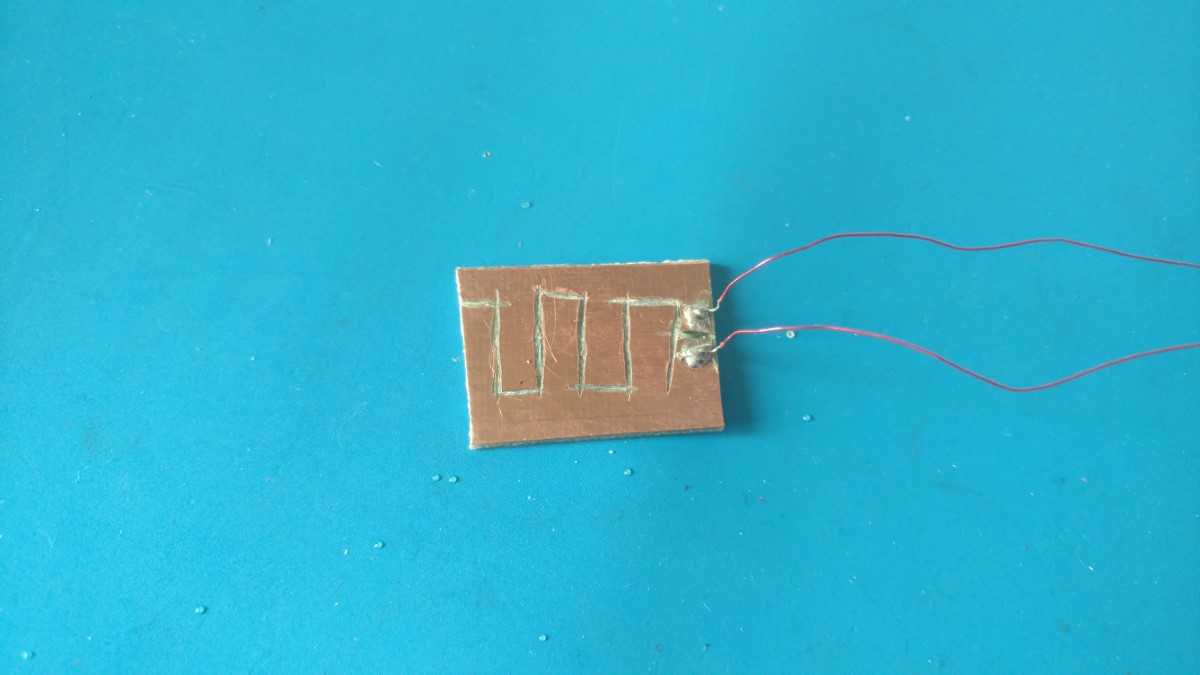
The sensor is simply a piece of copper-clad PCB split in half with a wire connected to each half. The more moist the sponge is, the lower the resistance of the sensor will be.
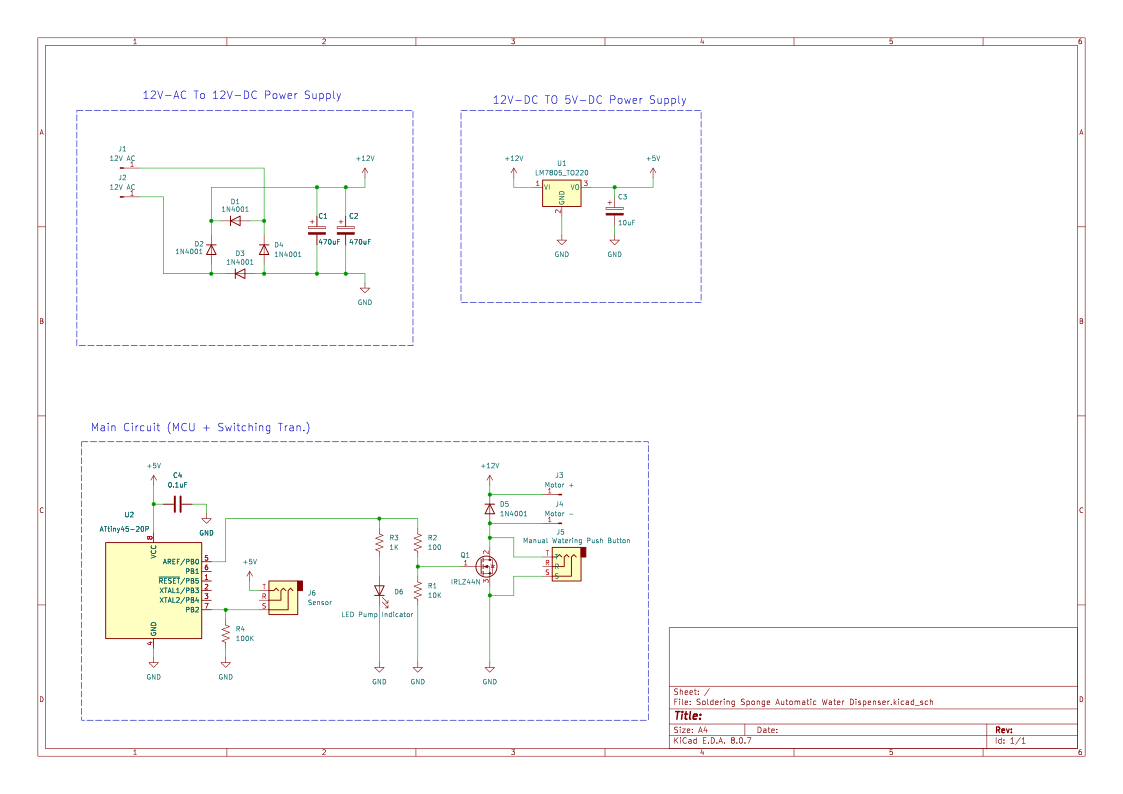
Schematic.
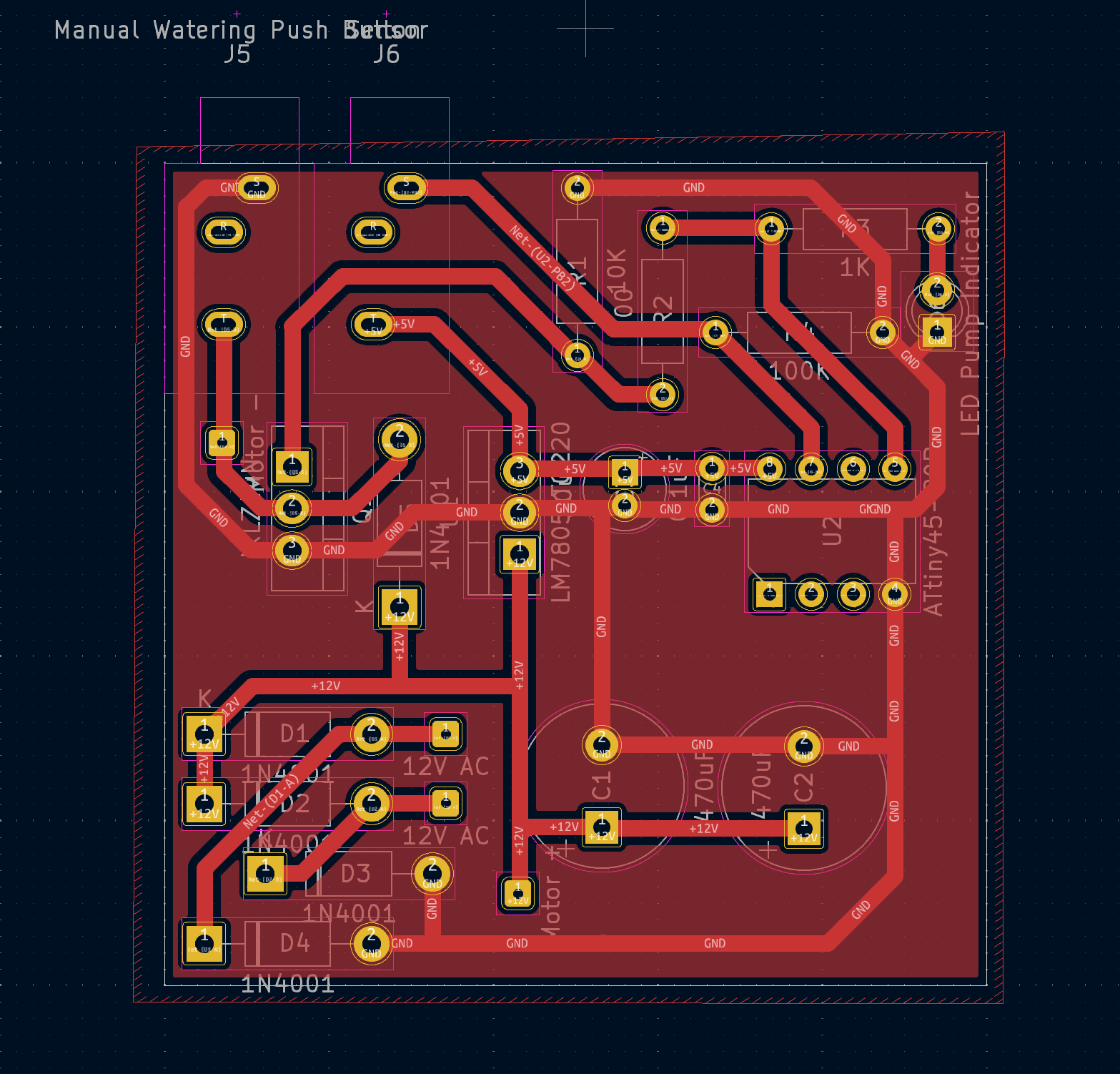
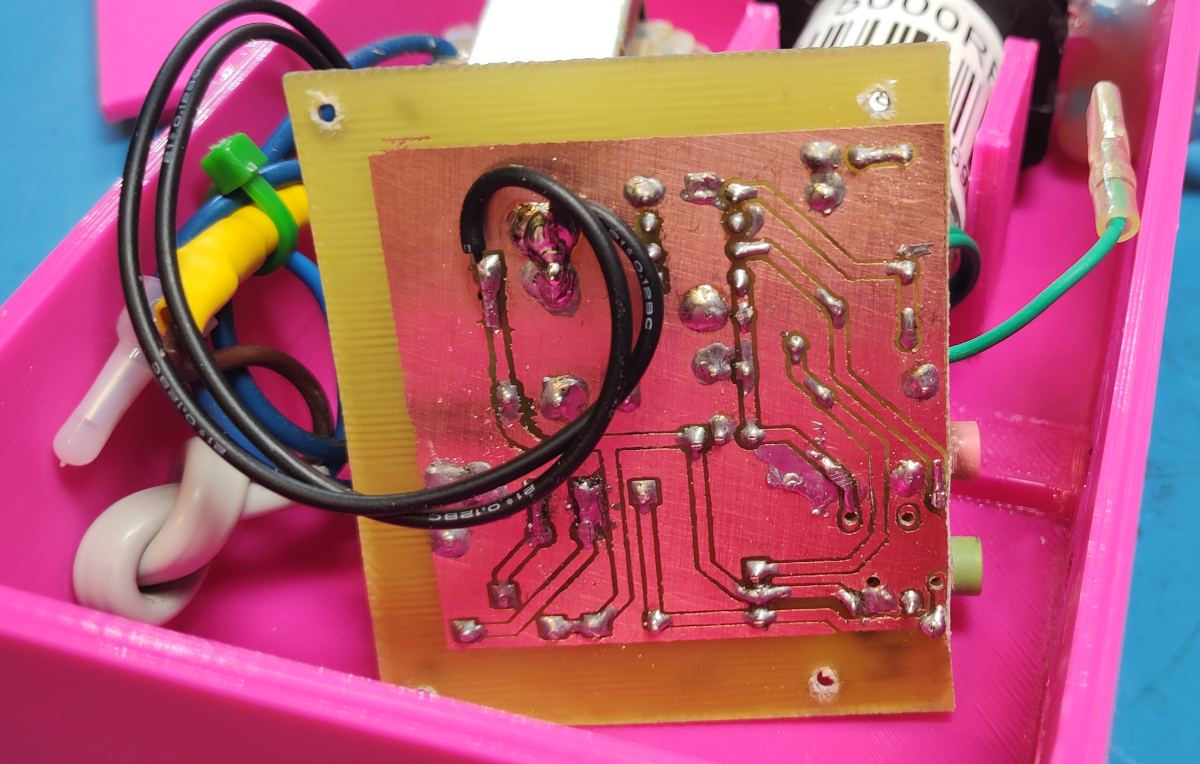
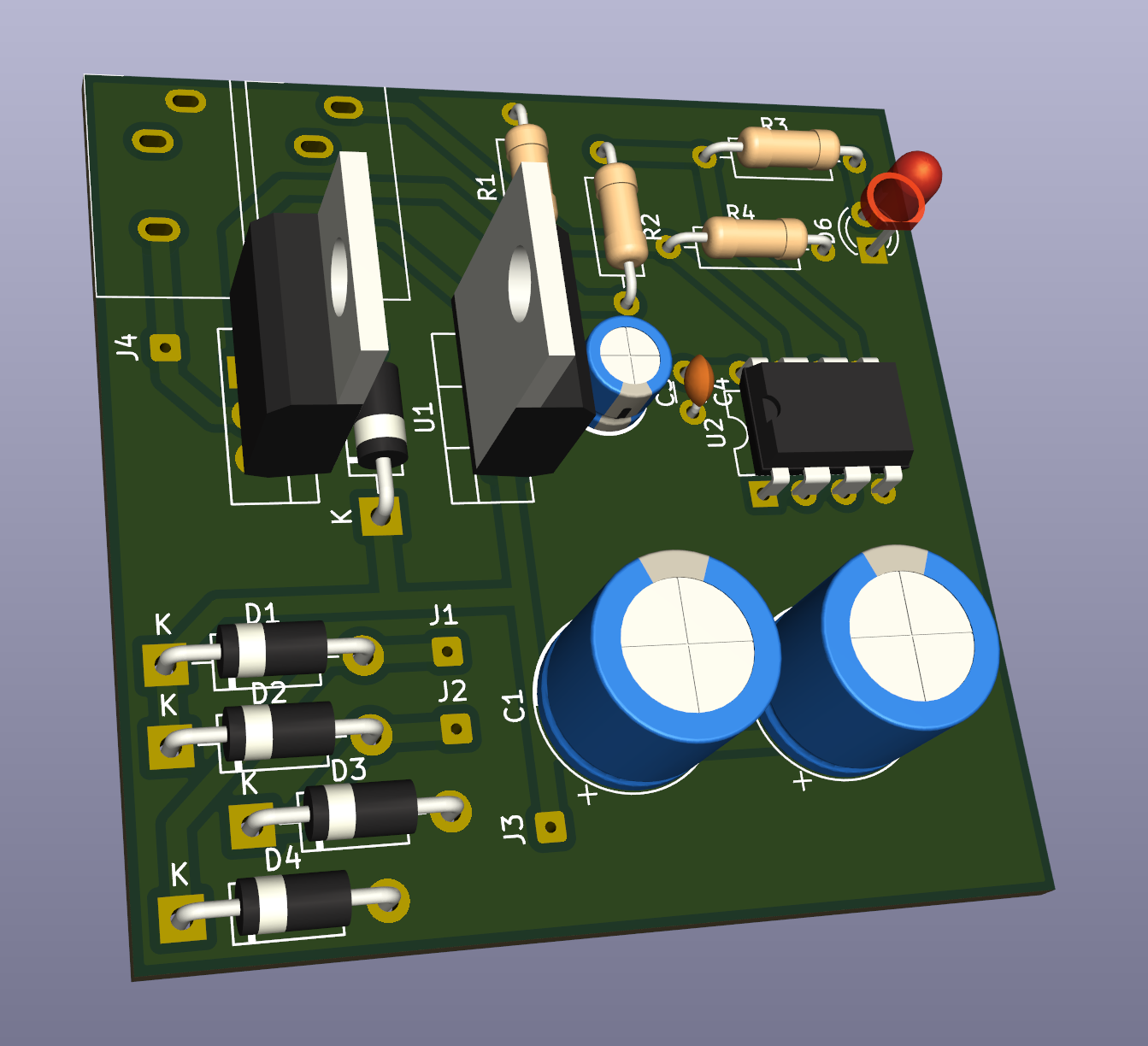
PCB in KiCad and the DIY PCB I made myself with the toner transfer method and ferric chloride etching.
Attiny45 MCU firmware. Note: See this tutorial here if you want to know how to program an Attiny.
int relayControllPin = 0;
int moistureDetectionPin = 7;

int dispenseTime = 1000;
int dispenseThreshold = 600;
int timesDispensed = 0;
int maxTimesDispensed = 10;
int minutesPassed = 0;
int moistureLevel = 0;

void setup()
{
  pinMode(relayControllPin, OUTPUT);
  //pinMode(moistureDetectionPin, INPUT); //Don't use pinMode() for ADC.
}

void loop()
{

  if(minutesPassed > 30 && maxTimesDispensed <= timesDispensed)
  {
    delay(60000);
    return;
  }

  if(maxTimesDispensed <= timesDispensed)
  {
    int newMoistureLevel = analogRead(moistureDetectionPin);

    //If the new moisture level is within +/- 50 of the old moisture level assume there is no change in the moisture level.
    if((moistureLevel+50) > newMoistureLevel && (moistureLevel-50) < newMoistureLevel)
      timesDispensed = 0;

      minuteDelay();
      return;
  }

  moistureLevel = analogRead(moistureDetectionPin);

  if(moistureLevel < dispenseThreshold)
  {
    dispense();
  }
  /*else if(moistureLevel > 900)
  {
    //Sennsor pads probably shorted.
  }*/
  else
  {
    minuteDelay();
  }
}

void minuteDelay(){
  delay(60000); //Delay for a minute.
  minutesPassed++;
}

void dispense(){
    digitalWrite(relayControllPin, HIGH);
    delay(dispenseTime);
    digitalWrite(relayControllPin, LOW);

    timesDispensed++;

    delay(1000);
}
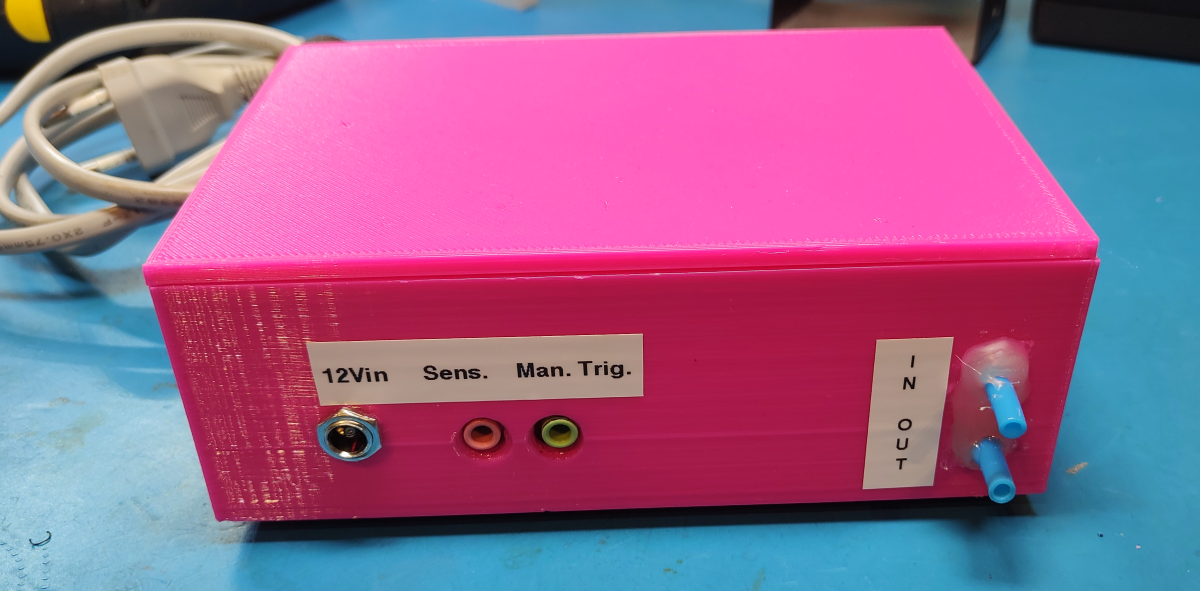
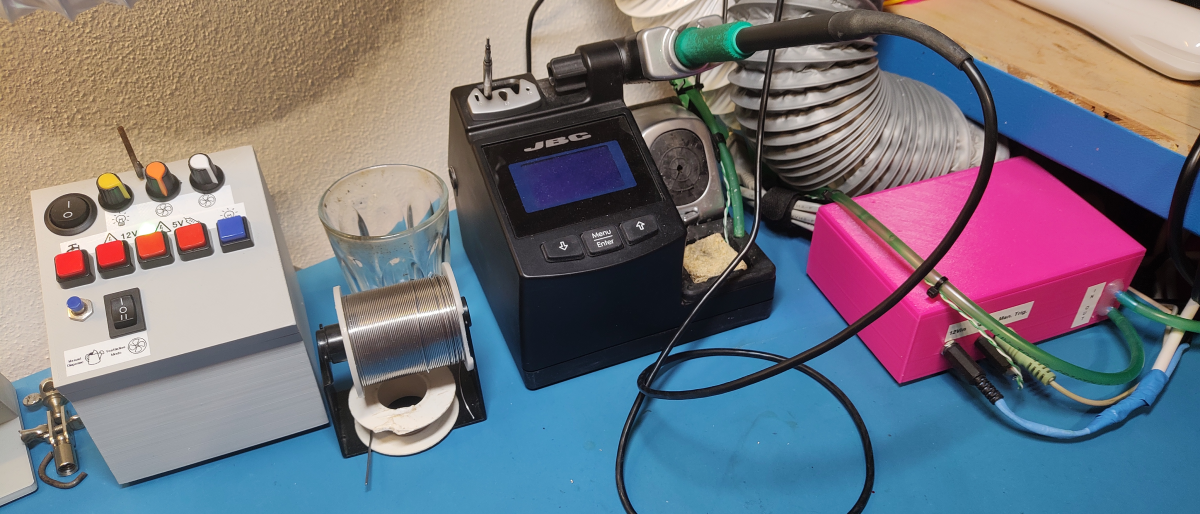
All assembled.
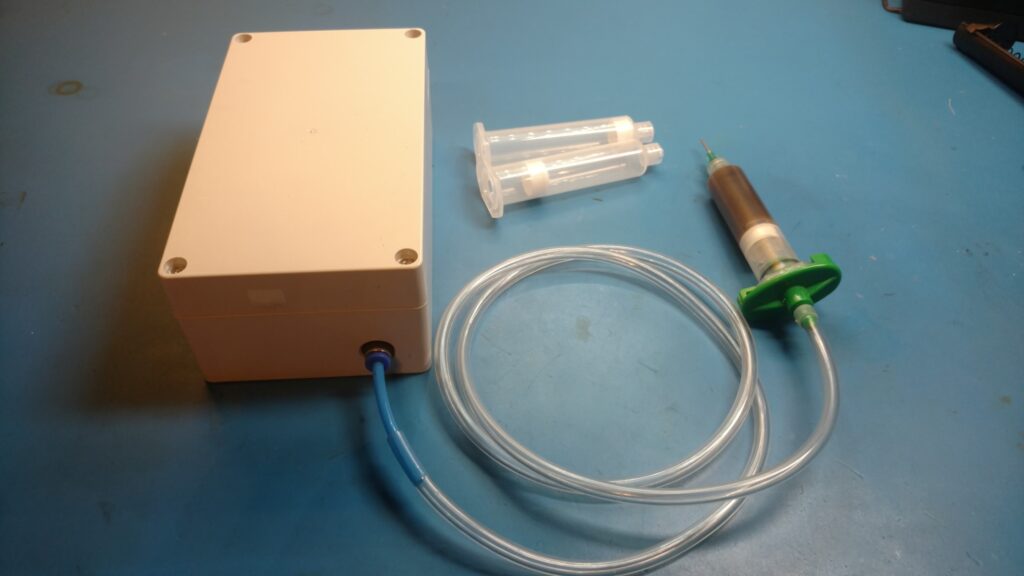
This is it all connected up. The power and manual water dispense are connected to the gray control panel on the left. I use that control panel to control the solder paste/flux dispenser, fume exhaust system and the ventilation controller, which I wrote about in more detail in my home automation post here.